
Nobody Is Running This Simulation
No hidden code, no cosmic puppeteer, no fate pulling strings. Buddhism’s radical claim: you’re authoring your karma.

Most people, if they’re honest, assume something’s pulling the strings.
Not always God or fate. Sometimes it’s a supercomputer running the code, or the nation, the party, the hive mind arranging the pieces, or even the secular hope of some unified field or master equation behind the mess. It’s a reflex. Chaos can’t just be chaos. There has to be a backstage operator.

Buddhism, the raw version, not the app or the aesthetic, says flat out there isn’t one. No ultimate controller. Not hidden, not unknowable, not waiting in the wings. Absent.
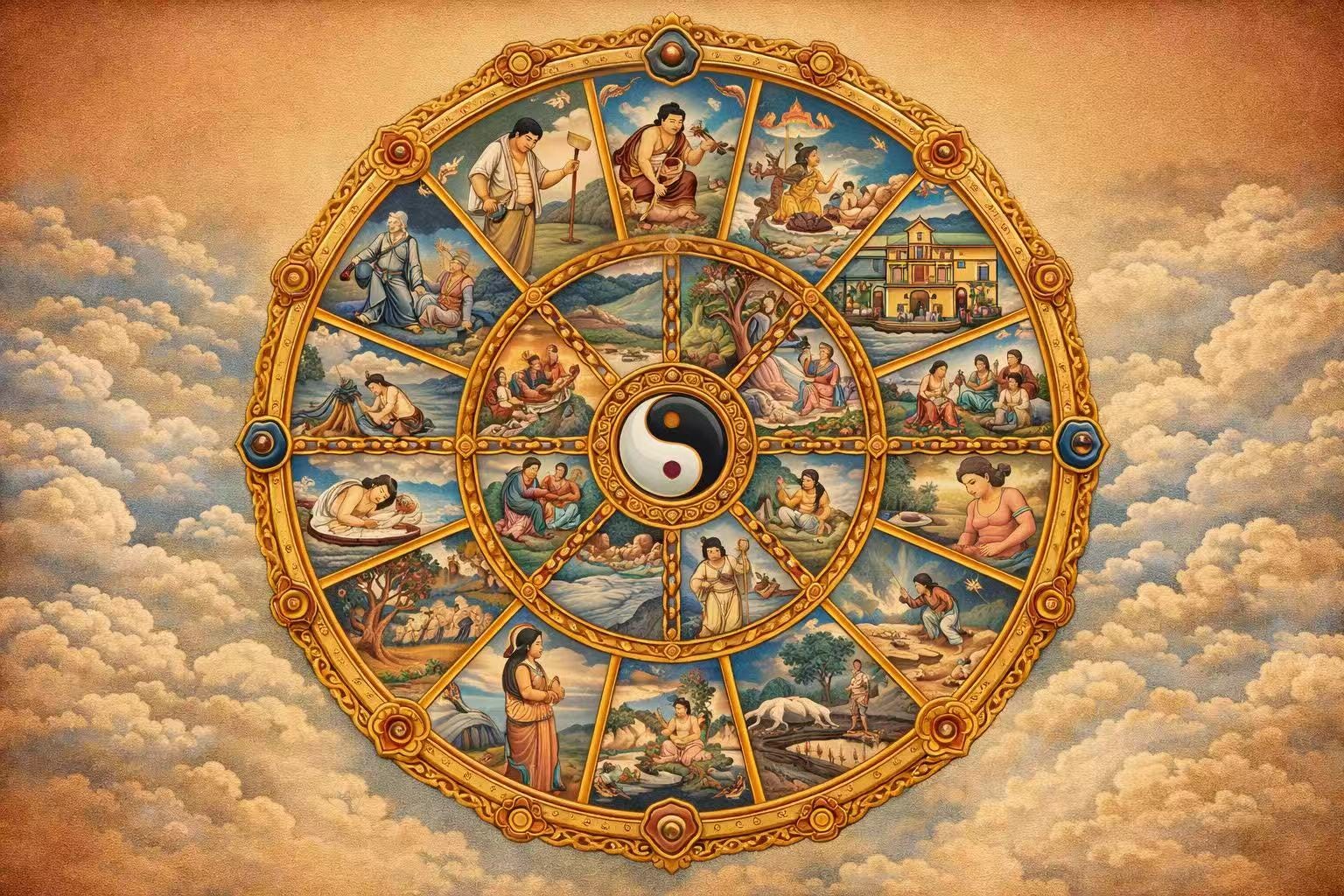
What there is instead is a sprawling web of dependent origination. Phenomena arise in relation to each other with no fixed center, no first cause, no master variable. Everything’s a conventional label stacked on other labels. The collective is a fiction. The individual is also a fiction, but a differently structured one, one that actually has causal teeth.
That’s where it cuts.
No ultimate controller means your life isn’t scripted from outside. Not by the cosmos, not by some fatalistic “karma” people throw around like cosmic IOUs, not by your childhood as an unbreakable cage. Your trajectory is shaped by your own intentions and actions. That’s karma, properly understood, not payback, not “what goes around comes around.” It’s the instruction set your existence runs on, and you’re the one typing the commands, consciously or not.
The staggering variety of lives, bodies, circumstances, trajectories, all of it traces back to accumulated intentional action in a stream of consciousness that doesn’t snap off at death. No divine blueprint. No random static. Just the momentum of what you’ve willed and done.
Most of what passes for “Buddhist” content online is personal therapy wearing borrowed robes. People miss this because the radical agency gets sanded down. Buddhism hands you the wheel with no excuses from above, no excuses from within. There’s no inner puppeteer either. Just patterns you’ve reinforced.
Here’s a strange parallel for the empirically inclined.
In quantum information theory, the prevailing view now, after decades of work on the black hole information paradox, is that information isn’t destroyed. Even in black holes, it changes form but doesn’t vanish. Recent calculations involving entanglement islands, replica wormholes, and Page curve recovery strongly suggest unitarity holds, though the exact mechanics in realistic spacetimes are still being worked out. Hawking conceded the point years ago, and the field has largely moved past fatal loss toward preservation.
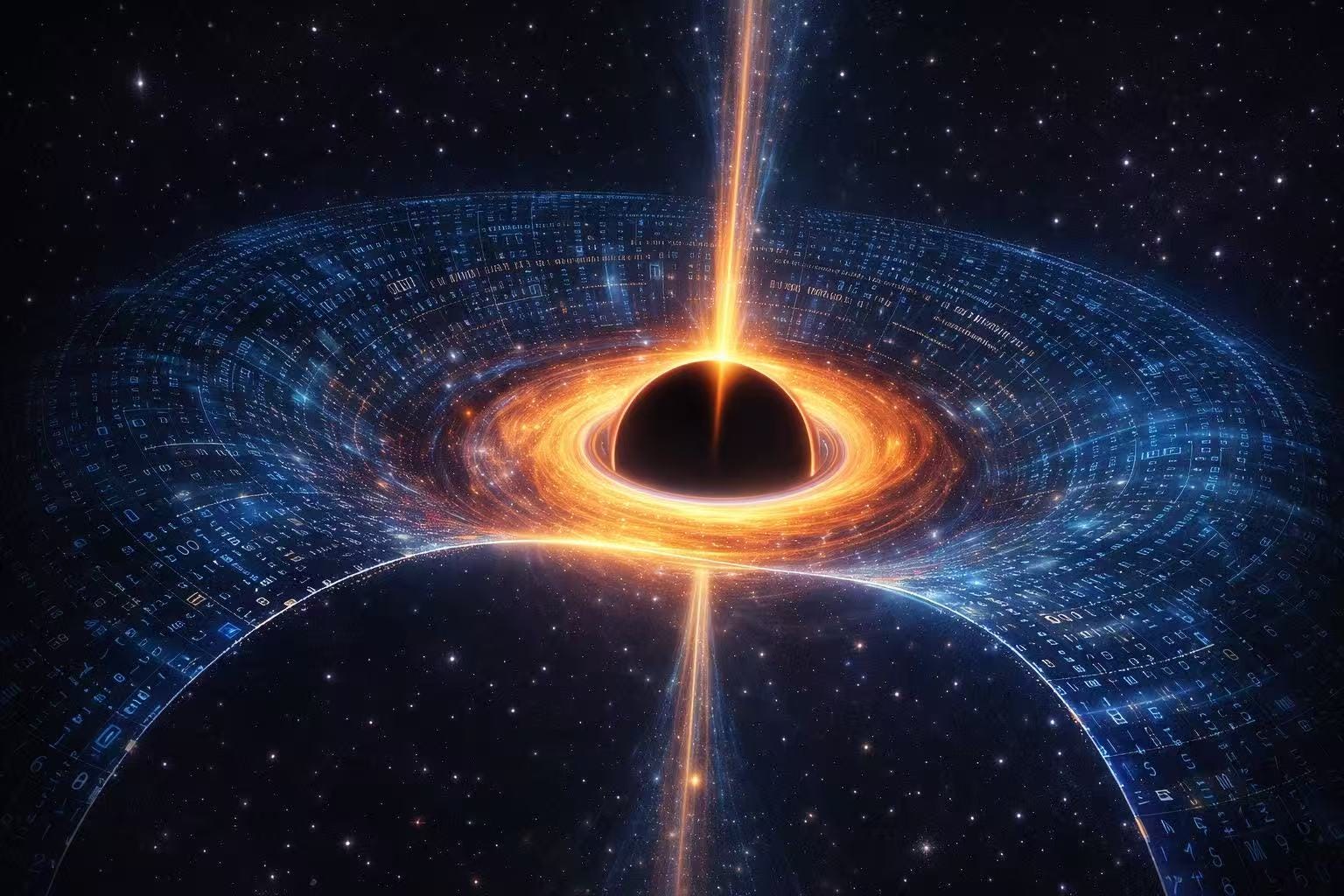
This echoes the karma model uncannily. Karma isn’t a moral ledger to be paid off. It’s more like encoded patterns in a stream of consciousness, biasing future probabilities. You don’t erase it. You transform it. You redirect the flow.
Buddhism diverges hard here from the Jains, especially Digambara. They aimed to burn karma off completely through extreme austerity until nothing remained. Buddhism says no. The fulcrum isn’t the karma itself, but the underlying cognitive code that keeps generating it. Shift the code, shift what gets produced.
Which brings up what almost nobody wants to say straight. Real cognitive change is rarer and harder than people pretend.
Meditation, new ideas, insights, they feel profound, but they rarely touch the deep architecture. The patterns driving behavior and thus karma have serious inertia. They’re structural, not superficial. Without precise, targeted work on those root tendencies, the stream can keep veering in the same unhelpful direction for lifetimes.
Understanding the map isn’t walking the path. Insight alone doesn’t rewire the hardware.
The world of dependent origination isn’t arbitrary chaos. It’s precise, almost mathematical. Causes yield their exact effects, nothing bleeds illegitimately into anything else, yet everything interconnects without a central boss. The diversity of experience is fully explained, no mysteries invoked.
You’re not a passenger in it.
The only real question left is whether you’re actually driving, or just convincing yourself you are.

Coming soon: a series digging into the precise work needed to shift those stubborn root patterns in the cognitive code—methods that cut through the usual meditation-insight-retreat illusions and actually redirect the stream.
If you enjoyed this piece, you might also like:
Collected Topics of Epistemology - Focuses on traditional Tibetan Buddhist logic/pramana teachings.
Adhiyana Buddhism - General Teachings from Neo Shakya covering broad Buddhist Topics.
OṂ A RA PA CA NA DHĪḤ
Well said, but I need more repetition. Millions, trillions of repetitions because I pretend not to understand.
I embrace this. Very much looking forward to the next piece in the series... "shift those stubborn root patterns in the cognitive code—methods that cut through the usual meditation-insight-retreat illusions and actually redirect the stream." Many thanks!!!!